Aefled and Eleanor is set shortly after the Norman Conquest and focuses on an English village now occupied by a Norman lord who came over with the Conqueror. Having fought at Hastings he was rewarded handsomely with lands, manors and entitlements. This is a story representative of the times when one set of occupants, namely English, were ejected in favour of another set of occupants, the Normans, who were never going to leave and eventually would become the ancestors of the English aristocracy.
I wanted to present the fictional village of Castle St Mary’s as vividly as possible by peopling it with the kind of characters that would have been found in a typical manorial village of that time. Since it has a mill there would be a miller and other workers. There would by outlying farmsteads, tenanted perhaps by resentful men who had once been independent and their families whose lives would be shaped by hard agricultural labour. Women and children would share a great many of the tasks outdoors such as collecting firewood and hedgerow fruits as well as cooking, washing, distilling, and so on, in the home. People would rely on traditional knowledge about the seasons and plants to supply daily needs. They would be observant of weather patterns and animal behaviour, they would know seasonal plants and when to pick them.
And sometimes they would fall ill.
In areas without monasteries where knowledgeable monks dispensed medicines distilled from plants in their herbariums, responsibility for local medical aid might well fall to the ‘wise old woman.’ An elder female who had acquired knowledge over a long life was a useful source of ‘lore’. ‘Lore’, perhaps best described as a body of knowledge about the locality, not just the history of a place but a deep knowledge of everything that grew there and a long memory about weather patterns. Such a woman would know about plants, herbs, wayside berries and so on, she would know which could be usefully distilled, dried, pounded, or in other ways made into something curative. For example, any plant with the tag ‘wort’ was deemed to have beneficial properties which could be garnered and used for treatments.
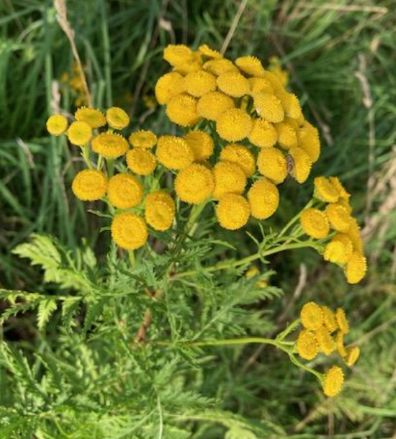
Many common plants like woundwort, liverwort, bladderwort, St John’s wort, reveal in their names the ‘lore’ adhering to them. In addition, a plant like meadowsweet, with its frothy white flowers, was deemed to be excellent for pain relief. Only in modern times was meadowsweet identified as a source of an aspirin-like painkiller. Tansy, with its clusters of bright yellow flowers was a remedy for rheumatism, constipation and digestive disorders. These plants were abundant and useful, but you had to know how to use them.
The ancient wisdom of native rural societies, based on observation accrued over centuries, rather than evidential knowledge, was often more accurate than we might believe.
Undoubtedly people of the remote rural villages of the eleventh century were ignorant by our standards, but on the other hand they knew far more about the their immediate natural world, the plants that grew locally, the wild animals they shared it with, signs of the weather, clouds and wind/. This knowledge: the ways of the seasons, the habits of the local wild animals, the qualities of the soil, the growing of crops and the wild flowers and herbs that grew locally, this knowledge, passed down and tested by time, was crucial to the production of food and medicines. If you lived long enough you could acquire expert knowledge. And vital to village life was a woman skilled in making herbal remedies – a ‘wise old woman.’
In my novel Aefled and Eleanor, I portray one such woman and try to illustrate the crucial role she played in village life. Her name is Mother Ethel.
The description of her cottage suggests her role.
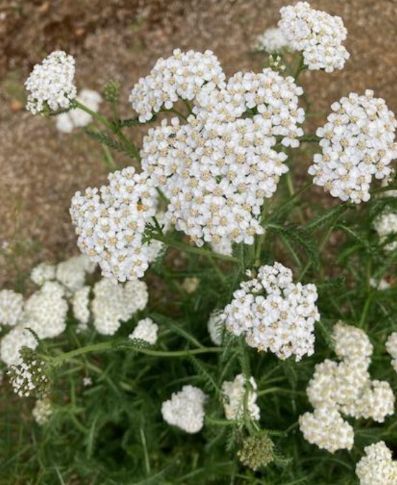
The cottage was “small, cluttered and hectic with odours. From the rafters “hung stiff cascades of dried flowers, bundles of herbs in frozen posies and bulbous medicinal roots, plucked or pulled at midsummer eve when their virtues were purest. Around the walls on precarious, uneven shelves were crocks of Mother Ethel’s brewings: wine and cordials made of nettles and alder, elder and rosehip, yarrow and barley.”
The character of Mother Ethel is representative of a certain type of village dweller, but she is also drawn as a personality. I believe it is important not to trivialise the importance of such women in village life, but, equally, not to over-romanticise them. Before the Conquest she was a young woman whose family-owned property. This property was taken and awarded to a Norman. Her husband died fighting the invader. She sank into poverty. A common tale of the times.
Mother Ethel invests in her knowledge of her locality and the years of experience which deliver her into a useful old age.
“A life-time’s treasury of small jars containing oils, tinctures, carminatives and herbal remedies with extracts drawn from digitalis and mandrake, St John’s wort and comfrey as well as ointments and balms of linseed and lanolin, lye and propolis, jostled together in every available space”
Nature is brought indoors and transformed.
Mother Ethel’s cottage “was a distillery, a medicine chest, a storehouse stocked with just about every useful plant of field, heath and woodland, whose marvellous properties [she] would extract according to her ancient recipes. Her craft belonged to a world before the Normans came, a world with its roots in pagan cults and mystical rites, unperturbed by Christian controversies or new political arrangements.”
Mother Ethel represents the past but also the eternal present of the English village. Belonging to an age before there were local physicians, she and her kind would deliver hope and healing.