December 2025

Old age calls for an individual’s subjective repositioning in time as one’s personal future gets shorter.
When you are young you can consider whole chunks of time, ten, twenty, thirty years or so and position yourself at the end of them. Ten years older, twenty years older, yes, but still, somehow the same me, capable of all the things I’m capable of now; one lives in the moment and that moment always stays subjectively the same.
Or does it? Are we not always constantly planning for the next thing, living in the future, expecting, planning, arranging, projecting; or in the past, regretting, remembering, longing, yearning? Then again aren’t these simply the terms we use for our emotional relationship with time?
Well, yes, perhaps. But, anyway, Einstein has been here and no-one can do the thinking about time better than Einstein with his glorious image of riding on a beam of light. Travelling along with light at a speed where time stops, so there’s no aging, no history…
In fact, Einstein had a rather impressive, white-haired, benign, old age, and lived to be 76.
The Bible reckons three score years and ten. National Statistics give us longer odds, into our eighties or more.
As old people, we have further to look back. But do we see anything more clearly? And aren’t we only concerned with our own histories, anyway: I was born……… my mother and father……… I went to school……… I studied……… I graduated……… I got a job……… then I met……… We married……… children came along……… etc.
Rightly or wrongly, I think that children do change your perspective, perhaps more than any other single life occurrence, for it is common to feel as though our personal lives have been extended through these off-spring lives. Then that travels down to grandchildren, then the next generation and so to posterity.
But is it true that we are not as anxious about posterity as we used to be? We are more concerned with ourselves, perhaps? Or we just want to leave enough so that our children can afford a house? Does anyone want undying fame anymore like the Romans did? Some do, but most of us just want a longer life.
But what does a personal long life tell us about the historical view? A personal life is so short and human history is so long that the one can surely have no effect on the other.
Perhaps as we age all we can hope for is a more generous interpretation of past lives, not just our own, but others’ too, a wider vision, a more open encounter with historical forces, a deeper understanding of our own nature and our own times, and a final readiness to accept that the past the future and now are, for us, one.
What is the Past? Is it not Now? Some time ago?
But that was once the Future. Time consumed
And made it so.
The reference to consuming is relevant. Using up, consuming, wearing out. We use ourselves up, we get worn away, reducing ourselves to Lear’s ‘shadow’ or William Hazlitt’s ‘remnant.’
Lear: ’Who is it that can tell me who I am?‘
Fool: ‘Lear’s shadow.’
“King Lear” Act 1, Scene 4
“We do not in the natural course of things die all at once; we are torn from ourselves piecemeal while living; faculty after faculty, attachment after attachment, and death only consigns the last remnant of what we were to the grave.”
William Hazlitt “Essays“
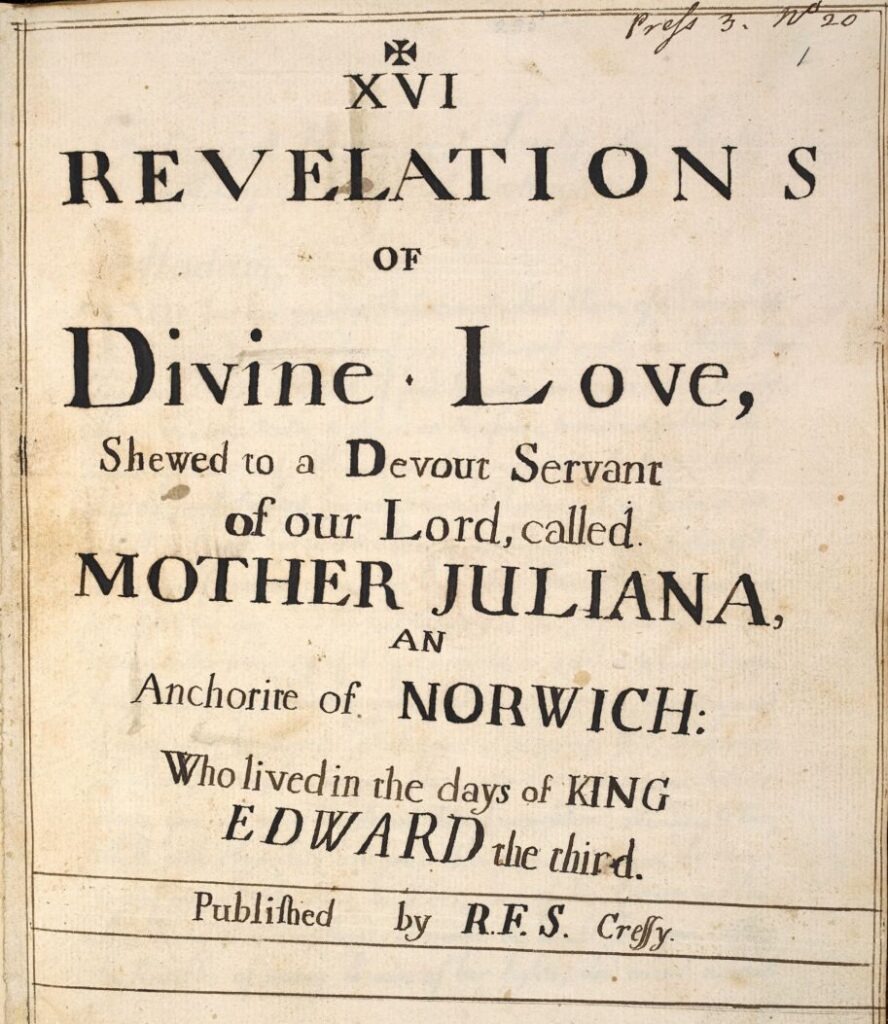
But then, perhaps, that’s to overlook the most important thing of all – the contrary. We are not all used up, we are not worn out or consumed. One thing abides. Love. For centuries Christians put love at the centre of creation. It was their definition of God, the foundational principle of reality originating from God.
The universe was created by God through Divine Love. And therefore, personal love, as a human emotion, love of one another, is a reflection of Divine Love in each of us, so the thinking goes.
I’d like to find agreement with this, to think along with it; I’d like it to be so. Because it would then follow that the love of one another, the capacity to love generously, to confide this best part of ourselves in another, would surely be to sense the little piece of Eternity we carry within ourselves and is never consumed and never wears out.