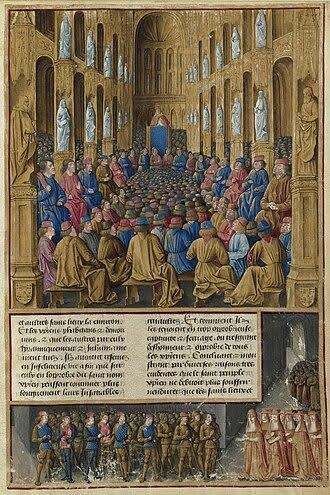
The speech that Pope Urban II made to the Council of Clermont was to lead to a shake-up of the European nobility to an extraordinary extent. It would usher in many years of fighting abroad, it would cause the mortgaging of Normandy, and set up a bitterness between the Muslim and Christian worlds that lasts to this day. The momentous address made to the Synod of the Catholic Church at Clermont in 1095, had implications far beyond the remit of the church. Why was it made? Was it a terrible mistake? Or was it answering a call for help in generous terms?
The call for help came from the young Emperor of Byzantium (Constantinople). Alexios Komnenos, was desperately in need of reinforcements to protect his Christian frontiers from the Seljuk Turks who had taken nearly all of Asia Minor from him. He sent an appeal to Pope Urban begging for aid.
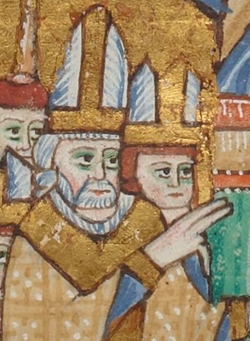
What was the Pope, an aristocratic French nobleman, a distinguished former Grand Prior of Cluny and Bishop of Ostia, to do in the face of such an appeal?
His answer was to convene the Council of Clermont in central France. Clermont was then under the rule of the Counts of Auvergne. With eager backing from many quarters, /Pope Urban preached a sermon which without exaggeration changed the course of history
The ramifications of this speech, made on the 27th November 1095, almost cannot be exaggerated. We know pretty well what was said as there exist four accounts of the speech written by men who were present and heard him. The one considered most reliable is by Fulcher of Chartres (1059-1127).
The significance of this occasion, with its dramatic ramifications, along with a rich reserve of evidence and documentation, inspired my references to these events in The Remarkable tale of the Bull and the Sheep (p. 232).
“At its core, was a simple message—fight and be saved. The words rang through the Auvergne, Burgundy, France, the Holy Roman Empire and eventually Normandy, setting off a reaction of unforeseen eagerness, not just in the warrior class and nobles, but in the lesser knights, manor lords and simple peasants. Here was a way to gain everlasting life.
‘If any man sets out from pure devotion, not for reputation or monetary gain, to liberate the Church of God at Jerusalem, his journey shall be reckoned in place of all penance.’
Suddenly men had in view heroic work of universal importance, a new road to the city of God, a guaranteed way to salvation. And roads filled, men were on the march, lords mortgaged their estates to raise the money. They set out overland or by sea, in cavalcades and on foot, with prayers on their lips while priests blessed them on their way; great ribbons of marching people who had cut up their cloaks and jerkins to make crosses to be worn as proud badges of a new-found fervour. An original appeal for military aid from Constantinople had transformed into a tide of Christian fervour, aimed at nothing less than the reconquest of Jerusalem. And among those swallowed up in this extraordinary pandemic of enthusiasm, to such a degree that he was ready to mortgage his entire dukedom, was Robert Curthose, Duke of Normandy.”
Robert Curthose is a major character in the novel, and the effect of Pope Urban’s speech on him is profound. Against all expectations he answers the call.
The true story of this momentous gamble and its results can be found in The Remarkable tale of the Bull and the Sheep.