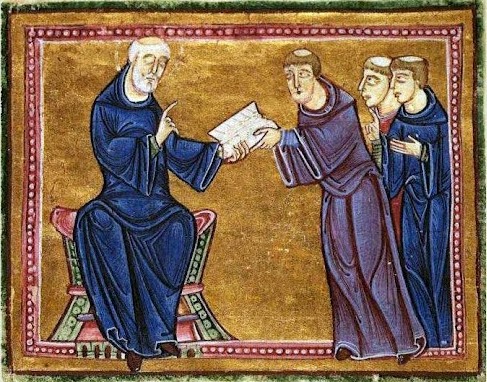
Known also as Godfrey of Cambrai, this monk and poet is not a well-known historical figure and seems never to have courted privilege or patronage in his lifetime. Nevertheless, he rose to occupy a place of some prestige and played a crucial part in some of the most serious and dramatic events of the period.
Probably, if asked, Godfrey would prefer to be known for his poetic output rather than as a Benedictine monk who held the post of Prior of Winchester Abbey from 1081-1107.
Quietly devoted to his community of monks, Godfrey turns up at the centre of critical events and also in innumerable archives and manuscript collections, perhaps because he was an inveterate scribbler. As well as serious epistles he wrote poems, epigrams, satires, eulogies and more serious verse. Today, Godfrey is not well known for his writings. But he was prominent in his time. Indeed, he was involved at the heart of church and state in two particularly notable episodes. The first concerned the sad fate of Wulfnoth, nephew of King Harold.
The story goes like this: About the year 1052, Wulfnoth, along with Hakkon, also a nephew of Harold, was given as a hostage to Duke William to guarantee that Harold would not seek the throne. In 1065, during Harold’s last visit to Duke William’s court in Normandy, Hakkon was released, but Harold was unable to negotiate the release of Wulfnoth who was kept as a hostage. When Harold sought the throne the following year in 1066, Wulfnoth became a prisoner. He was kept in more or less strict confinement, depending on the mood of William, for the next thirty-six years. At the death of the Conqueror in 1087, it was thought Wulfnoth might be released but by that time he had become institutionalised, so the situation drifted on. Eventually he was freed, brought back to England and committed to the care and protection of Prior Godfrey of Winchester. He was by now without any living family, apart from one niece whom he had never seen. He had no name, no status and no fortune. Luckily the monks of Winchester under Prior Godfrey treated him with sympathy and Godfrey himself felt great compassion for his long-drawn-out suffering. When he died in 1094, Wulfnoth had been a captive for 43 years. He was a man without a past, who had never had a future, never known independent life. By most accounts, he turned to God and found solace in his Christian faith, attending all the canonical hours of the Benedictine monastery.
However, some claim that he was at Salisbury not Winchester in his final days.Florence of Worcester puts him at Winchester while Orderic Vitalis, writing much later, puts him at Salisbury.
But since the sadness of his life and death was later expressed in a moving verse epitaph by Prior Godfrey, it is more likely that Wulfnoth died at Winchester. In the verse, Godfrey pays him the tribute of a title, ‘Earl Wulfnoth’, as if conferring some sort of dignity or trying to redress the total subjection of his life which was perpetually ‘caught up in human bonds.’ In fact Wulfnoth was not an Earl.
The following lines containing Godfrey’s tribute to Wulfnoth are from the Epigrammata Historica XII preserved in the Bodleian:
“The nobility of his forbears, his simple manners,
His sound views and honourable judgements,
The strength of his body and the fire of his intellect,
All these glorify Earl Wulfnoth.
Exile, prison, darkness, inclosure, chains
Receive the boy and forsake the old man.
Caught up in human bonds he bore them patiently,
Bound even more closely in service to God.”
For more on this story, see The Remarkable Tale of the Bull and the Sheep.
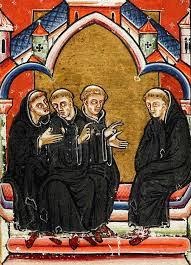
But events were going to confront Prior Godfrey with an even more delicate, and a lot more dangerous, task. It would hinge on a crucial decision, a decision that might have far-reaching consequences, possibly laying him open to charges of treason, culpable neglect or exceeding his authority. It would come abruptly, unexpectedly, without any time to prepare or reflect. In his capacity of Prior, he would suddenly be faced with a task that would have shaken him to the core both as a man and as a monk.
Sometime on the evening of August 2nd 1100, he would have to make one of the most crucial decisions of his life. He had only a few moments to make up his mind how to act in response to an event of such magnitude that it would soon reverberate through the kingdom.
We don’t know for sure where he was or what he was doing that evening, but it is likely he was presiding over the evening office of Vespers, or the night office of Compline. These were led by the Prior and attended by the whole of the monastic community.
Sometime that evening, between sunset and sleep, someone brought him word that a party of men had arrived at the west door of the Minster. As far as can be made out from the accounts of the time, a party of huntsmen had come with a cart on which there lay a dead body. The body had been brought from Brockenhurst Forest, a vast royal hunting park some twenty miles off where there was a royal lodge and where the King loved to hunt through the whole of August.
Prior Godfrey was told that the body which lay on a farmer’s cart outside the door of his church was that of William Rufus, the King of England. The King. Dead. In a cart. Brought by some of the hunting party that had found him!
Imagine the shock of this.
The King had been shot by an arrow and found lying abandoned by some huntsmen and their beaters. Having commandeered a passing woodsman’s cart, they had brought him to the obvious place, the only reachable place that could handle the obsequies of a king.
How did Prior Godfrey face this almost incredible event? A dead king at the porch of his church in a cart. It would surely only have taken a moment for him to be aware that he was faced not only with a delicate situation, but a dangerous one. What was he to do?
King William Rufus was neither a pious man nor reputed to be a friend of the church. He regularly purloined church monies by the unscrupulous practice of simony, or, as churchmen would have it, stealing. He did not attend to the pieties, he sometimes insulted churchmen, he cracked inappropriate jokes and surrounded himself with place seekers and reprobates. This, at least, was his reputation. Prior Godfrey knew him personally and did not believe all the rumours, but that was not the question. The question was – what would the king’s successor expect from him and how would he judge whatever Prior Godfrey was about to do? He was in danger of either doing too much, or too little. A moment’s reflection told him that the king died in pursuit of pleasure, the hunt of deer being among his chief pleasures, unshriven, all his sins upon him. Moreover, he was not a popular king among the people. His younger brother Henry, who was the likely successor, was an opportunistic, rather than a loyal, supporter.
The question confronting Prior Godfrey then became: should I take the king and bury his body here in the Abbey nave, or shall I ask for guidance? Can I make this decision myself? If so, what obsequies shall I perform? What prayers shall I say? What service shall I conduct? Shall I rouse the whole community and spread the news? Who should I inform of this catastrophe? Shall I limit myself to performing the dignified rites as for any Christian man who met with sudden death? How shall I answer my conscience in this matter?
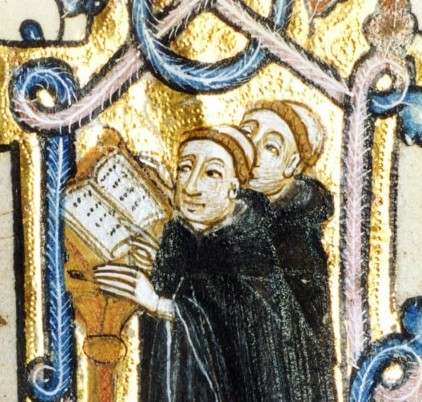
Prior Godfrey must have known, during those moments when he was thinking through these questions, that what had happened was an event of almost ungraspable magnitude that would have ramifications throughout England, Normandy and beyond, and would be felt in Rome. It would inaugurate a new reign, a new order. It might cause war among rival claimants. What should he do?
It might have seemed at that moment as if History paused and waited for Prior Godfrey to come to a decision.
What did Godfrey Decide? Follow this story in After the Arrow.